Choosing the Top China Zinc Cobalt Plating Suppliers? This question deserves more than a list of factory names. Zinc Cobalt Plating performance depends on alloy composition, bath control, passivation, sealing, and process consistency. A bright sample may look impressive, yet fail after humidity exposure or salt-spray testing.
Dr. Frank Altmayer, an AESF Fellow and long-time electroplating specialist, has stated, “The best finish is the one that meets the specification consistently.” That principle should guide every supplier comparison. Buyers should request coating-thickness records, alloy data, adhesion results, corrosion-test reports, and clear process controls. Ask for evidence, not promises.
Small details matter. Inspectors should examine threaded areas, sharp edges, recesses, and contact points. These locations often reveal uneven coverage first. Reliable suppliers can explain their pretreatment sequence, plating-current controls, passivation options, and quality checkpoints. They should also support RoHS and REACH documentation when required.
Still, no supplier is perfect. A polished website does not prove stable production. Laboratory results may not represent every production batch. This is where my own caution begins: supplier selection should include trial orders, independent testing, and practical communication reviews.
The strongest manufacturers usually share traceable batch records, defined acceptance standards, and realistic delivery commitments. They also discuss weaknesses openly. That matters.
This guide examines leading China-based suppliers through technical capability, quality evidence, customization support, export experience, and customer reliability. The goal is not to crown one universal winner. It is to identify the supplier most suitable for your component, environment, specification, and risk tolerance.
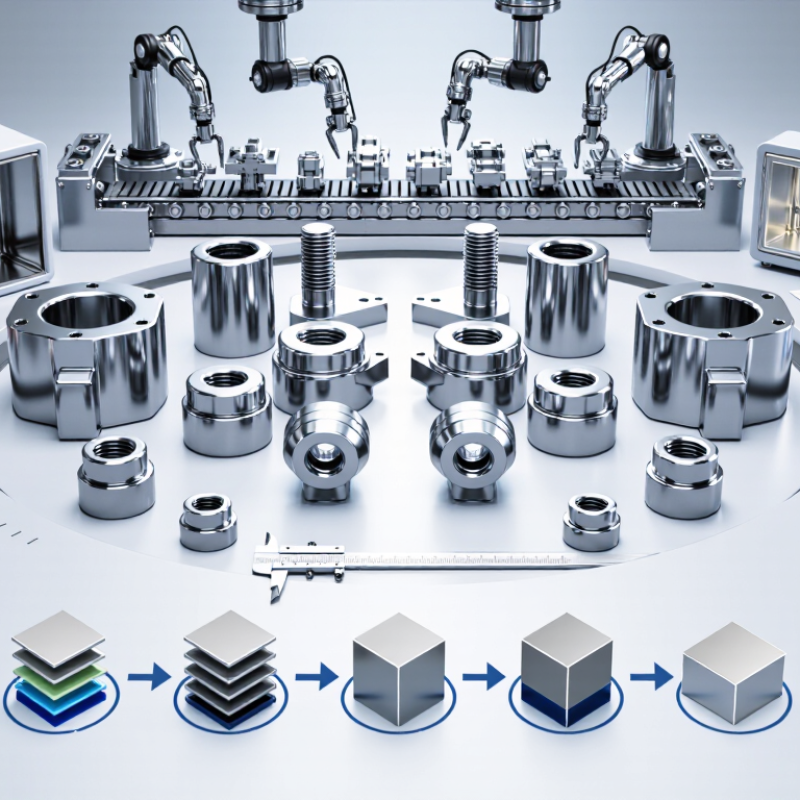
Zinc-cobalt plating is an electroplated zinc alloy coating applied mainly to steel parts. It combines zinc’s sacrificial protection with cobalt’s improved corrosion performance. During plating, electric current deposits the alloy onto a cleaned metal surface. The final coating usually receives passivation and sometimes a sealer.
This finish is common on automotive fasteners, brake components, brackets, hydraulic fittings, and outdoor hardware. It suits parts exposed to road moisture, salt, mild chemicals, and changing temperatures. A silver, black, or lightly iridescent surface may be selected for appearance and identification. More importantly, engineers specify coating thickness, hydrogen-relief treatment, and thread clearance.
Testing should match the real application. Salt-spray results are useful, but they cannot predict every field condition. Torque testing matters for threaded fasteners. Dimensional checks matter for precision assemblies. I have found that rushed specifications often create avoidable failures. A thicker coating is not always better. It may affect fit, friction, or assembly force.
Reliable suppliers should explain their pretreatment process, alloy control, passivation options, and inspection records. They should also provide sample testing before volume production. Zinc-cobalt plating is durable, but it is not invincible. Poor cleaning, damaged edges, and trapped moisture can still cause corrosion. Small details matter.
| Evaluation Dimension | Technical Data or Typical Range | What It Means for Buyers | Common Applications |
|---|---|---|---|
| Plating Type | Electrodeposited zinc alloy coating containing zinc as the primary metal and a small cobalt addition. | Provides sacrificial corrosion protection while offering improved surface performance compared with conventional zinc in many applications. | Fasteners, stamped parts, automotive hardware, industrial components, and hydraulic equipment. |
| Typical Cobalt Content | Common commercial deposits generally contain approximately 0.5%–3% cobalt by mass; the actual value depends on the electrolyte and process controls. | Alloy composition should be confirmed through coating analysis because cobalt content affects appearance, corrosion behavior, and process consistency. | Components requiring higher corrosion resistance than standard electroplated zinc. |
| Coating Thickness | Typical functional thickness is approximately 5–25 μm, with the specified value determined by the component geometry, corrosion requirement, and dimensional tolerance. | Thicker coatings usually provide greater zinc mass, but excessive thickness can affect threads, fits, and assembly dimensions. | Threaded fasteners, brackets, clips, automotive assemblies, and precision metal parts. |
| Corrosion Protection Mechanism | Zinc acts as a sacrificial anode, protecting exposed steel preferentially. The alloy coating is normally combined with a conversion coating or passivation layer. | Protection depends on coating thickness, alloy composition, passivation, sealing, surface preparation, and handling. | Carbon-steel and low-alloy-steel parts used in humid or mildly corrosive environments. |
| Passivation Options | Trivalent chromium passivation is widely used for current production. Clear, blue, black, and other appearance variants may be available depending on the process. | Specify the passivation type and color separately from the zinc-cobalt alloy coating. Chromium(VI)-free systems are preferred where environmental restrictions apply. | Automotive, appliance, construction, electrical, and general industrial hardware. |
| Sealer or Topcoat | An organic or inorganic sealer can be applied over the passivation layer to improve barrier protection, friction control, and resistance to handling damage. | Topcoats are useful when the part must meet demanding corrosion, torque-tension, or chemical-resistance requirements. | High-strength fasteners, underbody components, machinery parts, and outdoor equipment. |
| Corrosion-Test Reference | Neutral salt spray testing is commonly used for process comparison. Results must be stated with the exact coating system, thickness, test method, and failure criterion. | Salt-spray hours should not be compared across different passivations or sealers without matching the complete coating specification. | Supplier qualification, production audits, incoming inspection, and process validation. |
| Relevant Standards | ISO 19598 addresses electrodeposited zinc and zinc alloy coatings with chromium(VI)-free passivation. ASTM B633 covers electrodeposited zinc coatings on iron and steel; the applicable specification should be confirmed for zinc-cobalt alloy systems. | Standards should be listed on the purchase specification together with coating thickness, passivation, corrosion-test requirements, and dimensional limits. | International sourcing, automotive supply chains, industrial procurement, and quality documentation. |
| Hydrogen Embrittlement Risk | Electroplating high-strength steel can introduce hydrogen. Susceptible parts may require post-plating hydrogen relief baking according to the applicable engineering standard. | Material hardness, tensile strength, plating process, baking time, and baking temperature must be reviewed before production approval. | High-strength bolts, springs, safety-critical fasteners, and hardened steel components. |
| Dimensional Control | The deposited coating increases the external dimensions and can affect thread fit, bearing surfaces, holes, and sliding interfaces. | Critical dimensions should be measured after plating, and masking or allowance should be agreed before mass production. | Fine-pitch threads, hydraulic components, precision brackets, shafts, and close-tolerance assemblies. |
| Base Materials | Most commonly applied to steel and iron-based substrates after cleaning, activation, and suitable pretreatment. | Surface cleanliness and pretreatment strongly influence adhesion, appearance, and corrosion performance. | Carbon steel, low-alloy steel, stamped steel, machined steel, and ferrous castings where suitable. |
| Appearance | Depending on the passivation and sealer, the finish may range from silver or bluish-silver to black or other specified colors. | Color uniformity is primarily a passivation and process-control issue; appearance requirements should include approved samples or color limits. | Visible automotive hardware, consumer products, appliances, electrical fittings, and decorative industrial parts. |
| Supplier Qualification Criteria | Evaluate process capability, bath chemistry control, coating-thickness measurement, alloy-composition testing, salt-spray records, wastewater compliance, traceability, and corrective-action procedures. | A technically capable supplier should provide a complete process specification and inspection report rather than quoting only a plating name. | China-based sourcing projects, contract plating, export manufacturing, and repeat-production programs. |
| Key Purchase Specification | Define substrate grade, coating type, cobalt-content target if required, minimum local thickness, passivation, sealer, appearance, corrosion-test method, hydrogen-relief requirements, and inspection frequency. | A complete specification reduces variation between batches and makes quotations from different suppliers easier to compare. | Automotive parts, industrial fasteners, machinery components, and engineered metal assemblies. |
It is an electroplated zinc alloy coating applied mainly to steel parts. Electric current deposits the coating. The surface usually receives passivation and sometimes a sealer.
It is used on automotive fasteners, brake components, brackets, hydraulic fittings, and outdoor hardware. These parts may face road moisture, salt, mild chemicals, and temperature changes.
Zinc offers sacrificial protection, while cobalt can improve corrosion performance. The finish may appear silver, black, or lightly iridescent. Appearance is not everything.
Confirm coating thickness, cobalt content, hydrogen-relief treatment, and thread clearance. A thicker coating may reduce fit or change assembly friction. More coating is not always better.
Use salt-spray testing, adhesion checks, dimensional inspections, and torque testing when appropriate. Test threaded fasteners for assembly force. Check edges and recesses carefully.
Large facilities may control pretreatment, plating, rinsing, drying, inspection, and packaging internally. Mid-sized job shops often handle flexible batches. Smaller workshops may compete through speed and local service.
Request process records, sample panels, recent inspection data, and batch traceability. Ask how the supplier controls the plating bath and coating thickness. Certificates help, but evidence matters more.
Send identical drawings to three suppliers and compare their samples. Measure coating thickness on edges, recesses, and threads. A polished sample can mislead.
Poor cleaning, damaged edges, trapped moisture, and outsourced processes can cause corrosion or weak traceability. Confirm wastewater controls and worker-safety procedures. Small details matter.
Yes, especially for complex shapes or safety-critical parts. Use independent laboratory testing when necessary. A supplier may promise tight tolerances, then struggle with real production.
Zinc Cobalt Plating is a functional surface treatment that combines the corrosion resistance of zinc with the enhanced durability and performance of cobalt. It is commonly used for automotive components, fasteners, machinery parts, electrical hardware, and other metal products exposed to moisture, friction, or demanding working conditions. The process can be adjusted through different coating thicknesses, finishes, and post-treatment options to meet specific application requirements.
China’s zinc cobalt plating supplier market includes specialized plating facilities, integrated metal-processing companies, and manufacturers that provide coating alongside machining or assembly services. Leading suppliers typically demonstrate stable process control, uniform coverage, reliable adhesion, efficient production capacity, and strong environmental management. When comparing suppliers, buyers should review quality systems, testing methods, production consistency, certifications, lead times, communication, and customization capabilities. The right partner should also provide clear technical documentation, sample evaluation, transparent pricing, and dependable quality assurance from initial testing through regular production.

 HIYIE
HIYIE